SEO recovery case study: 94.6% YoY organic revenue growth after a Google spam update
Part of the TIV partnership - bootstrapped to $20M ARR over 8 years of tech implementation and support
View the full story →184%
Increase in organic revenue
127%
Growth in organic traffic
68%
Increase in first-page rankings
4.2×
Return on SEO investment
About the client
Our client is a leading UK consultancy specialising in pensions, investment, employee benefits and wealth consultancy. They advise some of the UK’s largest pension schemes and are supported by a £300 billion track record of assets under advice.
- Industry
- Financial Services
- Location
- United Kingdom
- Technology
- ReactJS, Laravel, PHP and PostgreSQL
Project overview
How we recovered organic visibility and revenue
We developed a structured SEO recovery strategy combining technical improvements, content optimisation and ongoing performance analysis to restore organic traffic, rankings and revenue.
Identifying the causes of the organic decline
We analysed search visibility, rankings, technical performance and content quality to determine why traffic and revenue had declined following the Google update.
Resolving technical SEO and content issues
We corrected crawlability, indexing, internal linking and page-quality issues while improving content relevance and alignment with search intent.
Measuring recovery and scaling organic growth
We monitored rankings, organic traffic, conversions and revenue before expanding the successful improvements across priority commercial pages.

Key challenges
The system is designed as a modular platform with distinct yet connected components. Each part addresses a specific user need, ensuring both trustees and internal teams can work collaboratively.
-
Point-in-time reporting
Difficulty accessing historical trend data due to static snapshot reporting constraints.
-
Limited collaboration
Siloed workflows prevented seamless communication between trustees and administrators.
-
Fragmented oversight
Disconnected information sources made it difficult to maintain a complete and accurate view of performance.
-
Scaling issues
Existing reporting processes could not scale efficiently as data, users and operational requirements increased.

01
Platform functionality
The system was designed as a modular platform with distinct but connected components. Each component addressed a specific user and operational need.
- A modular platform architecture connected the system’s core components while allowing each function to address a specific user need.
- Integrated workflows improved communication, collaboration and access to shared information across the platform.
- A scalable technical foundation allowed new functionality, users and data requirements to be introduced over time.
01
Platform functionality
The system was designed as a modular platform with distinct but connected components. Each component addressed a specific user and operational need.
- A modular platform architecture connected the system’s core components while allowing each function to address a specific user need.
- Integrated workflows improved communication, collaboration and access to shared information across the platform.
- A scalable technical foundation allowed new functionality, users and data requirements to be introduced over time.


01
Platform functionality
The system was designed as a modular platform with distinct but connected components. Each component addressed a specific user and operational need.
- A modular platform architecture connected the system’s core components while allowing each function to address a specific user need.
- Integrated workflows improved communication, collaboration and access to shared information across the platform.
- A scalable technical foundation allowed new functionality, users and data requirements to be introduced over time.
01
Platform functionality
The system was designed as a modular platform with distinct but connected components. Each component addressed a specific user and operational need.
- A modular platform architecture connected the system’s core components while allowing each function to address a specific user need.
- Integrated workflows improved communication, collaboration and access to shared information across the platform.
- A scalable technical foundation allowed new functionality, users and data requirements to be introduced over time.


01
Platform functionality
The system was designed as a modular platform with distinct but connected components. Each component addressed a specific user and operational need.
- A modular platform architecture connected the system’s core components while allowing each function to address a specific user need.
- Integrated workflows improved communication, collaboration and access to shared information across the platform.
- A scalable technical foundation allowed new functionality, users and data requirements to be introduced over time.
01
Platform functionality
The system was designed as a modular platform with distinct but connected components. Each component addressed a specific user and operational need.
- A modular platform architecture connected the system’s core components while allowing each function to address a specific user need.
- Integrated workflows improved communication, collaboration and access to shared information across the platform.
- A scalable technical foundation allowed new functionality, users and data requirements to be introduced over time.

Client Testimonial
WEBDIGITA has partnered with over 200 clients across 10 countries. A few of our esteemed clientele include.
For the last 8 years, Webdigita has handled our eCommerce technology end-to-end. Strategy, consulting, implementation, and continuous optimisation. They're reliable, fast, and always focused on what will actually move the business forward.

Norma Benson
CEO & Co-Founder, Grafana
Inside This Partnership
Explore the TIV workstreams in detail
Deep-dive case studies from this eight-year engagement
Implementing ERP to Shopify Plus
Connecting inventory and order flow across the full catalogue in real time.
Read case study →Implementing ERP to Shopify Plus
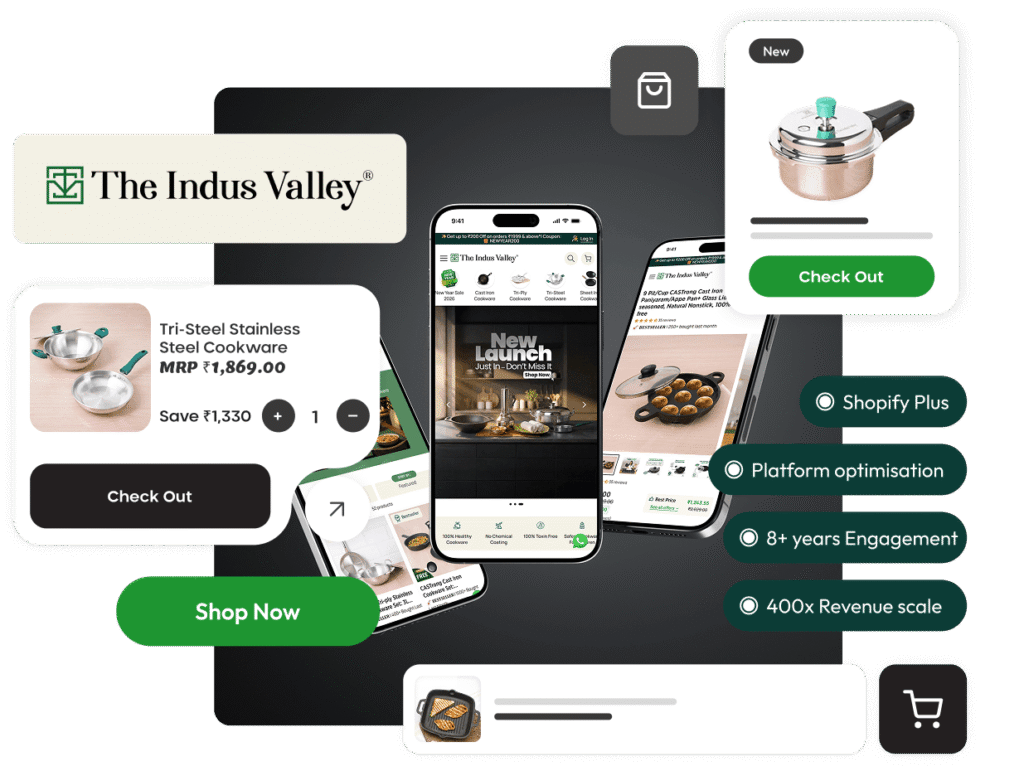
Connecting inventory and order flow across the full catalogue in real time.
Read case study →Implementing ERP to Shopify Plus
Connecting inventory and order flow across the full catalogue in real time.
Read case study →Frequently Asked Questions
What is ADP Celergo?
Item #2
Item #3
Ready to discuss your project with us?
Sense-check your roadmap with us.Get clarity on scope, cost and next steps.
Ideal if you're planning a rebuild, migration, or growth sprint in the next 60-90 days.

Prepared by Vamsi Krishna , Head Of Engineering – WEBDIGITA
Published